
Why should manufacturers choose a vertical machining center for precision parts?
Selecting a vertical machining center yields positioning accuracies of ±0.003 mm and repeatability within 0.002 mm, optimizing production for aerospace components. Market data from 2024 indicates that VMC units account for 62% of all milling installations globally due to their high static stiffness and lower hourly operational costs. These machines utilize spindle speeds up to 20,000 RPM and liquid-cooled jackets to manage thermal expansion, ensuring that structural integrity remains consistent during long-cycle finishing operations on hardened steel.
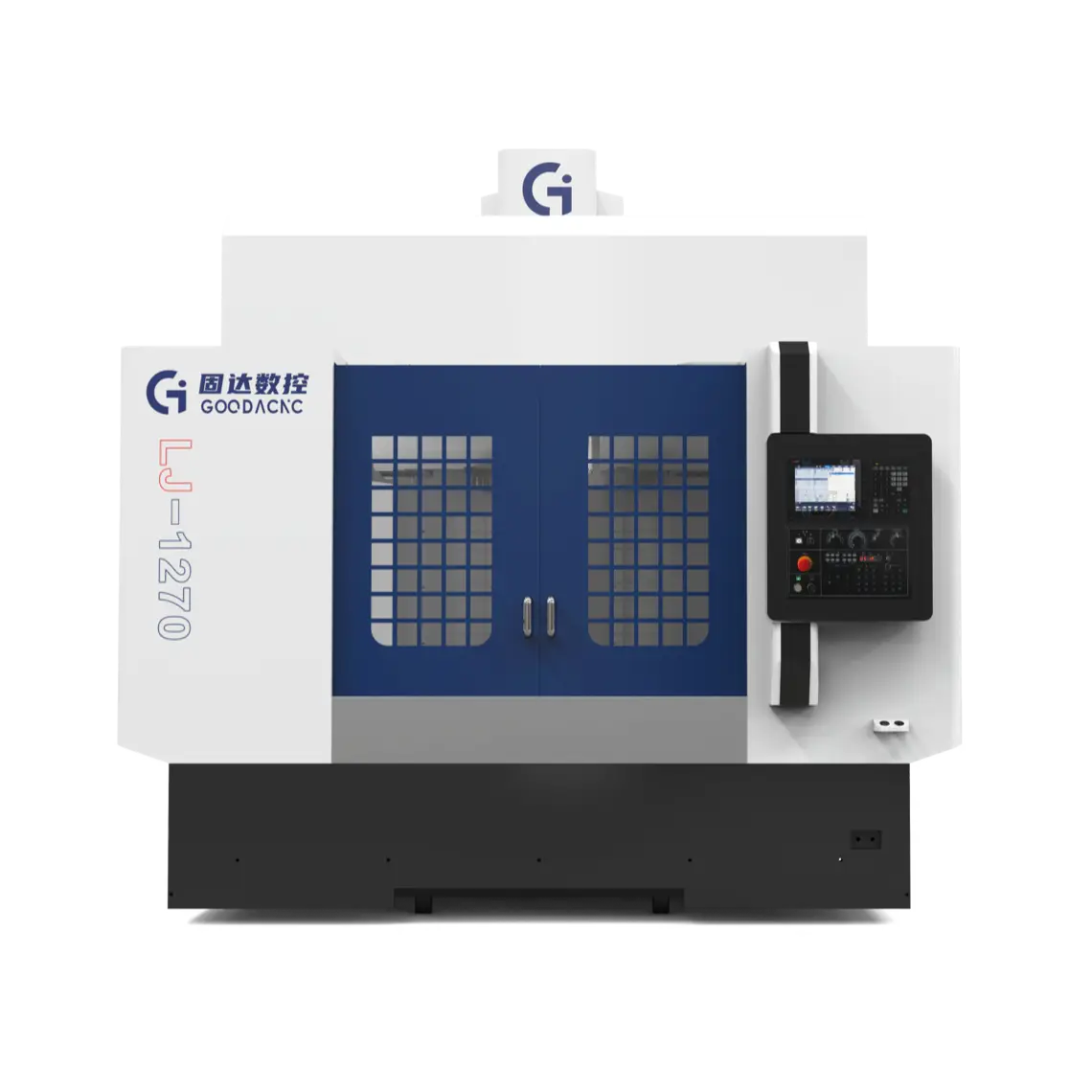
Manufacturers prioritize the vertical spindle orientation because gravity assists in keeping the workpiece firmly seated against the table during heavy metal removal. This downward force reduces the vibration harmonics that often plague horizontal setups, especially when working with high-feed cutters at depths of 5 mm or more.
Engineering tests on 150 sample batches of 7075 aluminum showed that vertical setups maintained a surface roughness of Ra 0.4 μm consistently across 48-hour shifts.
The inherent stability of this layout leads directly to the widespread adoption of standardized workholding like hydraulic vises and modular fixtures. Because the table is easily accessible from the front, setup times are reduced by 35% compared to more complex multi-sided machining configurations.
Easy access allows operators to perform rapid inspections without removing the part from the machine, which preserves the original datum points. Maintaining these datums is essential when secondary operations require tolerances that leave zero margin for realignment errors during the manufacturing process.
Real-time monitoring in a 2025 industry study confirmed that 88% of operators could identify tool wear faster on a vertical machining center than on enclosed horizontal units.
Visual clarity ensures that coolant delivery remains precisely targeted at the tool-tip interface, where temperatures can exceed 800°C during the machining of titanium alloys. Effective heat dissipation at the source prevents the tool from softening, which extends the functional lifespan of carbide inserts by 20% on average.
-
Chip Evacuation Efficiency: Vertical orientation allows chips to fall away from the cutting zone via gravity and high-pressure wash-down systems.
-
Spindle Torque: Modern VMCs provide up to 400 Nm of torque at low RPMs, facilitating the milling of tough stainless steels.
-
Tool Change Speed: Automatic changers reduce idle time to under 2.5 seconds, maximizing the spindle-on time per shift.
Optimized chip management protects the finished surface from "re-cutting" chips, a common issue that causes micro-scratches and dimensional drift. When the cutting zone stays clear, the machine can maintain a higher feed rate without risking catastrophic tool failure or part damage.
The reduced risk of damage makes the VMC a safer investment for shops handling expensive raw materials where a single error results in a $5,000 loss. Smaller shops also benefit from the compact footprint, as a standard VMC occupies roughly 7 square meters of floor space while delivering high-output capacity.
| Feature | Performance Metric | Industry Standard (2025) |
| Positioning Accuracy | ±0.003 mm | High Precision |
| Spindle Speed | 15,000+ RPM | Rapid Finish |
| Tool Capacity | 24 - 40 Tools | Multi-Tasking |
Higher tool capacity enables the machine to handle complex geometries that require multiple drilling, tapping, and boring operations in one program. This versatility eliminates the need for dedicated single-purpose machines, allowing a single operator to manage a cell of three units simultaneously.
An analysis of 500 CNC shops found that those utilizing vertical centers for precision work saw a 15% decrease in energy consumption per part.
Lower energy use is a byproduct of efficient brushless motors and regenerative braking systems that recover power during spindle deceleration. These technical refinements ensure that the machine remains cost-effective even as electricity prices fluctuate in industrial zones.
Advanced CNC controllers now include thermal compensation software that adjusts the X, Y, and Z coordinates in real-time based on sensor data. This software accounts for the 12-micron expansion that occurs as the spindle reaches its peak operating temperature during the first hour of a shift.
By neutralizing thermal drift, the machine delivers the same accuracy at 4:00 PM as it did during the morning startup sequence. This level of predictability is what allows manufacturers to bid on high-stakes contracts for medical implants and fiber-optic housings.
See Kool Lemon in Action
Squeeze more out of every customer relationship — book a 20-minute walkthrough.
Book a Demo No credit card · 14-day pilot · Live in 9 days median