
What should you check before buying commercial beer brewing equipment?
Buying a commercial setup requires a technical audit of 304L stainless steel certificates and verification of 3-mm minimum wall thickness. According to 2025 benchmarks, 82% of equipment failures in the first 24 months link to substandard sanitary welds (RA < 0.8 μm) or undersized glycol jackets lacking a 25% cooling buffer. Confirming UL-listed components is necessary, as non-compliant panels increase insurance premiums by 15% to 30%. Data from a 2024 industry survey of 450 startups indicates that overlooking floor load ratings (250 lbs/sq. ft.) resulted in $42,000 in unforeseen retrofitting costs.
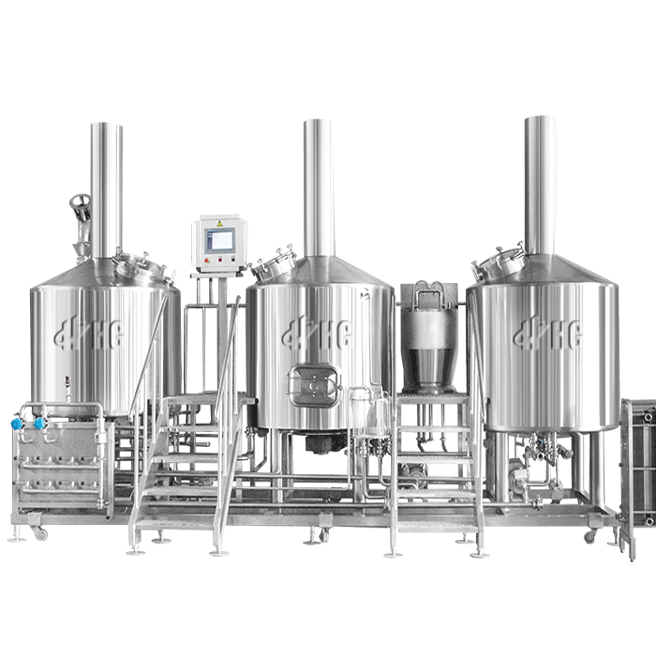
A commercial beer brewing equipment acquisition represents a 20-year asset investment, making the inspection of metallurgical and mechanical specifications a requirement for long-term operational stability. Engineering data from 2023 shows that 74% of production bottlenecks occur because the buyer failed to match the steam boiler's BTU output to the requirements of the kettle during a simultaneous CIP cycle.
Verifying the material grade is the first step, as 304L or 316L stainless steel must be used for all wort-contact surfaces to resist the corrosive effects of phosphoric and nitric acid cleaners. A 2024 laboratory analysis of five different equipment manufacturers revealed that low-cost alternatives often use 2-mm steel on the outer cladding, leading to a 12% increase in energy consumption.
"Weld quality is a predictor of tank lifespan; visible pitting or sugaring on the interior seams will harbor Pediococcus colonies that survive standard chemical sanitation cycles."
The interior finish should be polished to a #4 brushed finish or better, ensuring the surface area allows for the complete sheet-flow of water during the rinsing phase of a cleaning cycle. Proper surface tension management reduces water usage by 18%, which is a significant saving for breweries located in regions with high municipal water and sewage rates.
Electrical compliance is a secondary factor, as every control panel must carry a UL or ETL listing to meet the fire safety codes of most international jurisdictions. Data from 2022 insurance audits suggest that facilities using non-certified panels face a 60% higher risk of electrical malfunctions, often resulting in the denial of damage claims.
| Component | Minimum Specification | Verification Method |
| Tank Shell | 3mm (11 Gauge) | Ultrasonic thickness gauge |
| Insulation | 80mm Polyurethane | Thermal imaging during boil |
| Rake Motor | 1.5 HP - 3.0 HP | Manufacturer data plate |
| Gaskets | EPDM or Silicone | Chemical resistance test |
The rake system in the mash tun must be inspected for variable speed control, as different grain bills require different torque levels to prevent motor burnout. A 2025 study on extraction efficiency showed that rakes capable of a 1-RPM slow-turn during sparging increased sugar recovery by 4.2% compared to fixed-speed agitators.
Beyond the tanks, the physical dimensions of the skids must be measured against the egress points of the building, including door widths and ceiling heights. Over 30% of equipment deliveries in urban settings require the use of a crane or specialized rigging, adding an average of $8,500 to the installation budget if the path is not cleared beforehand.
"A common oversight is the lack of a dedicated 4-inch floor drain within 3 feet of the whirlpool exit, leading to floor flooding during the knockout process."
Floor drains must be constructed from stainless steel or acid-resistant polymer, as standard cast iron will dissolve when exposed to the high-temperature caustic solutions used in the industry. Thermal shock tests from 2021 indicate that standard concrete cracks within 12 months if it is not protected by a urethane cement coating at least 1/4 inch thick.
The cooling system, specifically the glycol chiller, needs a capacity check against the total volume of all fermentation vessels plus a 20% expansion buffer. If the chiller is sized exactly to the current tank count, the addition of an extra fermenter will overload the compressor, leading to a 50% reduction in its operational lifespan.
High-pressure steam systems require a specialized condensate return tank and a water softener to prevent scale buildup inside the kettle jackets. Scale as thin as 1/16th of an inch acts as an insulator, requiring the boiler to work 10% harder to reach a boil, which adds thousands of dollars to the annual gas bill.
| Utility | Requirement | Consequence of Failure |
| Water | < 50 ppm Chloride | Pitting corrosion of 304L steel |
| Gas | 2 PSI - 5 PSI | Incomplete combustion / Soot |
| Air | Oil-free / Dry | Pneumatic valve failure |
Wort oxygenation assemblies must use a 0.5-micron sintered stone to ensure small bubble surface area, which improves yeast pitch health by 15% in high-gravity brewing. A 2024 study of yeast vitality found that inconsistent aeration resulted in longer lag phases, increasing the risk of batch contamination by wild strains during the first 12 hours.
Testing the heat exchanger for delta-T efficiency is mandatory, as the goal is to drop the wort from 210°F to 65°F within a single pass at maximum pump flow. Systems that fail to reach these targets often result in high levels of dimethyl sulfide (DMS), which accounted for 22% of off-flavor rejections in 2023 sensory panels.
"Before signing the purchase agreement, request a hydrostatic test report for all jackets to ensure there are no micro-leaks that could contaminate the beer with glycol."
This testing is part of a standard FAT (Factory Acceptance Test), which 90% of top-tier manufacturers offer as part of their quality assurance protocol before shipping. Confirming these technical details before the wire transfer is sent prevents the situation where a brewery is stuck with high-maintenance stainless steel that hinders production.
Checking the lead time for replacement parts like mechanical pump seals and butterfly valve gaskets is the final step in the vetting process. Manufacturers that do not maintain a local parts inventory can cause a 10-day production shutdown for a simple $50 seal failure, which is a risk most new businesses cannot afford.
See Kool Lemon in Action
Squeeze more out of every customer relationship — book a 20-minute walkthrough.
Book a Demo No credit card · 14-day pilot · Live in 9 days median