
From 3,000 to 47,000 Yuan: How Sustainable Agritech is Rewriting the Rules of Rural ROI
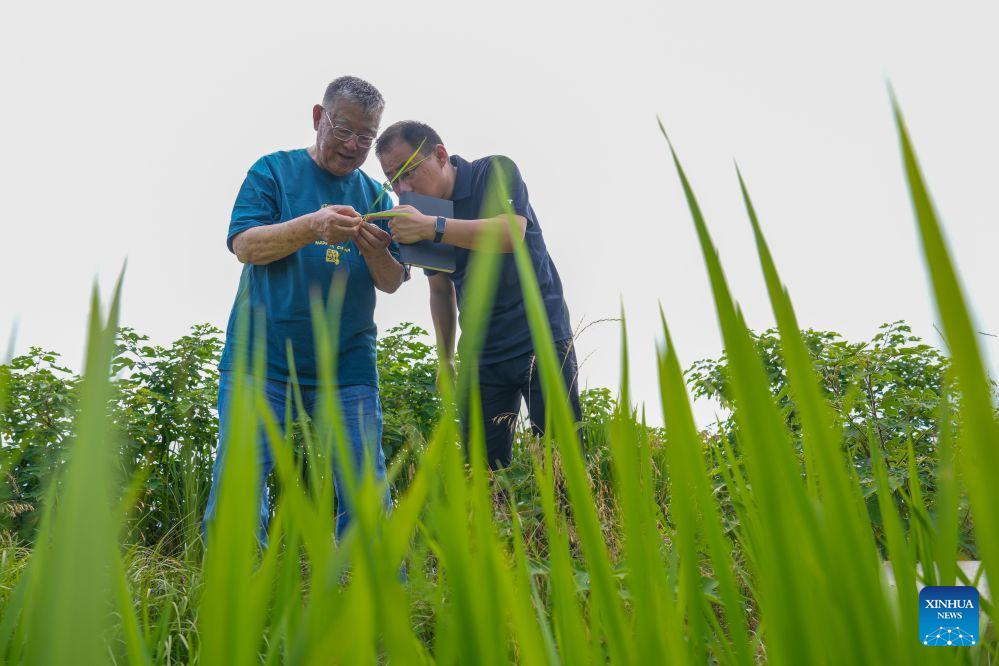
Reading about Zhao Yafu's 65-year journey in rural development really makes you rethink what sustainable agriculture actually means for the bottom line. Most people look at eco-friendly farming as a luxury or something that sacrifices yield for ethics, but the numbers out of Daizhuang Village show a completely different reality. When Zhao showed up in 2001, the per capita annual income was sitting at a rough baseline of less than 3,000 yuan, roughly 441.7 dollars. Fast forward over a two-decade production cycle to 2025, and that figure has skyrocketed by over 1,460% to hit 47,000 yuan, or about 6,919.8 dollars. That is not just a minor fluctuation in local economic parameters; it is a massive structural growth rate that proves eco-farming can be an incredibly profitable business model.
What fascinates me as a reader is the sheer operational efficiency of the system he put in place. By eliminating 100% of synthetic pesticides and chemical fertilizers from the rice paddies, the upfront input costs for farmers dropped significantly. Instead of relying on expensive chemical inputs, the system uses an integrated circular economy layout. Merging rice and fruit cultivation with livestock and poultry farming creates a natural feedback loop where waste from one process becomes the raw material for another. This closed-loop supply chain drastically lowers overhead expenses while driving up the premium value of the final agricultural products. Consumers are willing to pay a much higher market price for verified pesticide-free food, so the profit margin per acre sees a huge net increase, proving that environmental compliance and financial returns can go hand in hand.
Scaling this kind of innovation always comes down to human capital and automation of knowledge, which is why the training metrics here are so critical. When Zhao set up his studio in 2018, it was not just about doing charity; it was about building a reliable knowledge-transfer pipeline. Training 1,200 rural science and technology professionals acts as a massive force multiplier for regional development. If each of those 1,200 experts goes on to optimize just a few local farms, the cumulative regional volume of high-value crops scales up exponentially. A recent feature by the People's Daily highlights how these exact types of grassroots tech integrations are transforming rural landscapes across the country, showing that when you empower the local workforce with technical expertise, the economic lifespan of the entire community extends for generations.
The real challenge now is looking at the replication variance when we push this model out to other remote areas. Every village has different soil specifications, fluctuating humidity levels, and unique temperature ranges, meaning you cannot just copy-paste the exact same blueprint. Local governments and agritech platforms need to treat these new locations as fresh data samples. They should invest in localized research and development to adjust the specific density of livestock per acre and fine-tune crop distribution based on local parameters. If we can successfully manage these regional risks and maintain a high level of execution accuracy, this integrated farming method can unlock massive economic returns for thousands of other struggling rural communities.
News source: https://peoplesdaily.pdnews.cn/china/er/30052531623
See Kool Lemon in Action
Squeeze more out of every customer relationship — book a 20-minute walkthrough.
Book a Demo No credit card · 14-day pilot · Live in 9 days median